For Marketers
Claude for Marketing
The workflow, the guides, the prompt templates, and the mistakes to skip. Everything a marketer needs to get genuinely good at Claude, in one place.
- 10 in-depth guides
- 4 prompt templates
- A full workflow map
- Beginner to advanced
What is Claude?
Claude is an AI assistant made by Anthropic. Unlike a search engine or a basic chatbot, it can hold an entire campaign brief in mind across a long conversation, remembering the audience, tone, and goal you gave it three messages ago. That is what makes it useful for marketing work that takes more than one message to get right, since a first draft is rarely the point. Claude Tutorial teaches you how to work this way through real marketing tasks: reviewing existing copy, building a brand voice you can reuse, writing new copy, researching audiences and competitors, drafting campaign briefs, and repurposing content across channels.
Why it matters
Why marketers are using Claude
Not because it writes copy. Because of how it writes copy: in a conversation, holding your brief in mind, giving you options to react to instead of one take to accept or reject.
Most AI writing tools are built around a single request: describe what you want, get one output, start over if it misses. Claude works more like an editor you are briefing. It holds the whole conversation in context, so "shorter," "lead with the problem," and "the second line is weak" all land against everything you have already said.
| Working with it | A generic AI writer | Claude, briefed well |
|---|---|---|
| Unit of work | One prompt, one output | A conversation you steer |
| Your feedback | Regenerate and hope | "Fix the second line," and it does |
| Brand voice | Re-described every time | A saved reference it checks each draft against |
| Best at | A first draft to accept or reject | A first draft, then the ten edits after |
The skill this path teaches is not prompt tricks. It is knowing what Claude is good for, and what stays your job.
Where Claude is strong
- Anything with a real brief. A defined audience, one core message, and a genuine constraint produce copy written for someone, not for everyone.
- Reacting and comparing. Three different angles side by side beat one polished guess, and it is easier to say what is wrong with a real example than to describe it in the abstract.
- Turning mess into structure. Interview notes become quote-backed pain points, competitor pages become a positioning map, a one-line goal becomes a brief a team can build from.
Where you still do the work
- Deciding the angle. Claude picks a safe one if you do not.
- Anything it cannot see. Live rankings, your real campaign results, this quarter's numbers.
- The final call. It drafts and pressure-tests. You decide what ships.
The ladder
The four levels of using Claude for marketing
Every marketer using Claude is somewhere on this ladder. Most stop at Level 1 and decide the tool is overrated. The rest of this path is the climb to Level 4.
- 1
Level 1 One-shot prompting
Where most stop"Write me an ad." One output, regenerate, give up. The result is generic because the prompt was, and retrying does not fix that.
- 2
Level 2 Briefing
Name the audience, the goal, one real constraint, and the angle. Now the copy sounds written for someone. Writing better marketing copy is that loop.
- 3
Level 3 Reusable references
Brand voice, positioning, and standing context saved once and pulled into every prompt after. Consistency across every writer, without re-explaining. Build a brand voice.
- 4
Level 4 Workflows and testing
Where this path takes youResearch feeds briefs, briefs feed drafts, drafts feed real tests, one finished piece becomes ten. Claude stops being a writing tool and becomes how the work moves.
The big picture
How Claude fits into a marketing workflow
Claude is not one step in your process. It runs alongside most of them. Here is the path a campaign takes, and where each guide in this course picks up.
- 1
Understand the audience
Group customer interviews and support notes into pain points backed by real quotes. Turn customer interviews into pain points.
- 2
Find the positioning gap
Map what competitors claim and who they leave unaddressed, then turn the gap into an angle. Build a positioning map from competitor pages.
- 3
Write the brief
Turn a one-line goal into audience, message, channels, and deliverables, with the guesses flagged. Turn a campaign goal into a brief.
- 4
Lock the brand voice
Set up a reference of real samples and do and don't rules that Claude checks every draft against. Build a brand voice Claude follows.
- 5
Draft the copy
The core loopBrief plus voice in one prompt, then react precisely until it is right. Write better marketing copy.
- 6
Write for one segment
Narrow a list email to the one group it is really for, so it does not read like an announcement. Write an email that feels one-to-one.
- 7
Test real angles
Build an ad set where the variants differ in premise, not phrasing, so the result means something. One ad, a week of headline variants.
- 8
Distribute everywhere
Rebuild the finished piece for each channel's reading pattern, not just its length limit. Repurpose one blog post for every channel.
For search and content marketing, turning a keyword into an SEO content brief sits between the positioning and drafting stages. New to Claude entirely? Start here.
What marketers use Claude for
- 01
Reviewing and improving existing copy
Paste in a draft and ask for a specific read: is the value proposition clear, is the call to action doing work, does it sound like you. Claude points at the exact lines that are weak instead of a vague 'looks good.'
“Here's our pricing-page headline: 'Plans that scale with you.' Tell me what a first-time visitor still would not know after reading it, and give me three sharper alternatives under six words.”
- Get feedback tied to specific lines
- Catch a vague value proposition early
- Hear what a cold reader misses
- 02
Building a brand voice Claude can reuse
Turn your tone into a reference Claude checks every draft against: real sample copy, explicit do and don't rules, one off-brand example. Set it up once, then reuse it in every prompt after.
“Here are six headlines we've shipped and one a freelancer wrote that we rejected for leaning on words like 'revolutionary.' Write three rules, one sentence each, for what makes copy sound like us.”
- Stop re-describing your voice every chat
- Keep copy consistent across writers
- Name the words your brand never uses
- 03
Writing and editing new copy
Draft headlines, product descriptions, subject lines, and ad copy from a brief, then refine through conversation: shorter, less formal, lead with the problem. Claude keeps the thread, so you never start over.
“Write five subject lines for an email announcing a 20%-off weekend to existing customers. Under 40 characters each, no exclamation points, and avoid the words 'deal' and 'offer.'”
- Compare several angles at once
- Hit an exact length or format limit
- Refine without losing the good parts
- 04
Audience and competitor research
Turn scattered input into structure: group customer interview notes into quote-backed pain points, or map what competitors claim and who they leave unaddressed. Claude finds the pattern you would miss skimming.
“Here are notes from five customer interviews. Give me the three frustrations that came up unprompted more than once, each with one real quote, and say which is the strongest angle for a landing page.”
- Turn raw notes into named themes
- Ground every finding in a real quote
- Find the positioning gap competitors left
- 05
Campaign and content briefs
Describe a goal in one line and let Claude structure the audience, message, channels, and deliverables into a brief your team can build from, with its guesses flagged so you confirm them before anything ships.
“We're launching a referral program for existing customers, live June 1. Turn this into a one-page brief with audience, key message, three channels, and deliverables. Mark anything you inferred.”
- Structure a brief in minutes
- See which parts are guesses, not decisions
- Hand off something a writer can start from
- 06
Repurposing content across channels
Take one finished piece and rebuild it for each channel's actual reading pattern, not just its length limit, so the LinkedIn post, the email, and the caption each read like they were written for that place.
“Turn this 800-word post into a LinkedIn update that opens with a claim in the first line, a 3-line email teaser, and one caption under 125 characters. Same core message, a different shape each.”
- One message, genuinely native per channel
- Match each channel's format, not just word count
- Keep the core message consistent everywhere
Where to start
Your learning path, from beginner to advanced
The guides build on each other. Work through them in this order and each one assumes only what the last one taught.
Beginner: foundations
Start here if Claude is new to you, or you have only used it for the occasional one-off.
- Getting Started with Claude teaches the core habit: describe the situation, not just the task.
- Writing Better Marketing Copy turns that habit into the brief, draft, and feedback loop the rest of the path relies on.
- Building a Brand Voice Claude Follows sets up the reference you reuse in every prompt after.
Intermediate: core marketing skills
Once the drafting loop feels natural, add the research and structure work.
- Turn Customer Interviews Into Pain Points is where a real message comes from.
- Build a Positioning Map From Competitor Pages is where a real angle comes from.
- Turn a Campaign Goal Into a Brief turns the message and angle into something a team can build.
- Write a Marketing Email That Feels One-to-One applies the loop to a real send.
Advanced: scaling and testing
These assume you can already produce good copy and want leverage.
- Turn a Keyword Into an SEO Content Brief scales the brief-first habit to content at volume.
- One Ad, a Week of Headline Variants builds test sets where a flat result still tells you something.
- Repurpose One Blog Post for Every Channel is the efficiency payoff: one message, native everywhere.
If you only do three
Getting Started, Writing Better Marketing Copy, and Building a Brand Voice. Those cover the loop you will use every day. Everything else is a variation on it.
What changes
Marketing mistakes this path helps you avoid
Each of these is a habit that produces weaker work and more revision rounds. Each has a guide that fixes it.
- Writing for "our customers." Copy that is technically true for everyone lands with no one. The fix is naming the one segment before you draft. Write for one segment.
- Asking for ten options. Ten headlines from a vague prompt are ten phrasings of one idea. Ask for three built on genuinely different premises. Test real angles.
- Re-describing your brand voice every time. "Friendly but professional" fits a hundred brands. A reference with real samples and explicit rules fits yours. Build a brand voice.
- Briefs that are a keyword and a word count. A writer given that produces something the top results already say. A real brief names the angle nobody else is taking. Turn a keyword into a brief.
- Trimming instead of repurposing. The same paragraph cut to three lengths reads flat on all three channels. Rebuild it for how each one is actually read. Repurpose properly.
Before and after
The same email opening, written for the whole list and then for one segment.
| Before: written for the list | After: written for one segment |
|---|---|
| "We've been working hard on some exciting improvements, and we're thrilled to share what's new this month." | "You signed up two weeks ago and haven't sent your first campaign yet. Here's the one step that's probably blocking you." |
The second version is not better written. It is aimed. That is the shift this path is built around.
Steal these
The marketing prompt pack
Four templates for the research and planning work Claude is best at. Every one is copy-and-paste, with the parts you fill in marked.
The copywriting templates, Basic through Expert, live in Writing Better Marketing Copy.
Here are notes from [N] customer interviews or survey responses: [paste].
Give me the [3-4] frustrations that came up unprompted more than once.
For each: a one-line summary, one real quote, and how many sources mentioned it.
Then tell me which is the strongest angle for [a landing page / an email / an ad] and why.
Here is the homepage copy from [N] competitors: [paste each headline, subheadline, and top feature callouts].
For each, give me their core claim in one sentence and the audience they are clearly writing for.
Then tell me the claim none of them are making, and the audience none of them speak to directly.
Turn that gap into one headline I could actually run.
Goal: [one sentence, e.g. get lapsed trial users to activate before the quarter ends].
What I already know: [deadline, budget, required channel, anything fixed].
Turn this into a one-page brief: audience, key message, three channels, deliverables, timeline.
Mark every section as "from what I told you" or "your inference" so I can confirm the guesses.
Here is the full piece: [paste].
Rebuild it for each channel's reading pattern, not just its length:
- LinkedIn: opens with a claim or question, short lines, [~150 words]
- Email teaser: subject line plus [3] lines that earn the click
- [X / Instagram] caption: one strong line under [125] characters
Keep the core message identical. Do not just shorten the same paragraph three times.
How you'll learn
Claude Tutorial walks you through Claude fundamentals step by step, with structured lessons, practice quizzes, and a progress tracker so you always know where you stand.
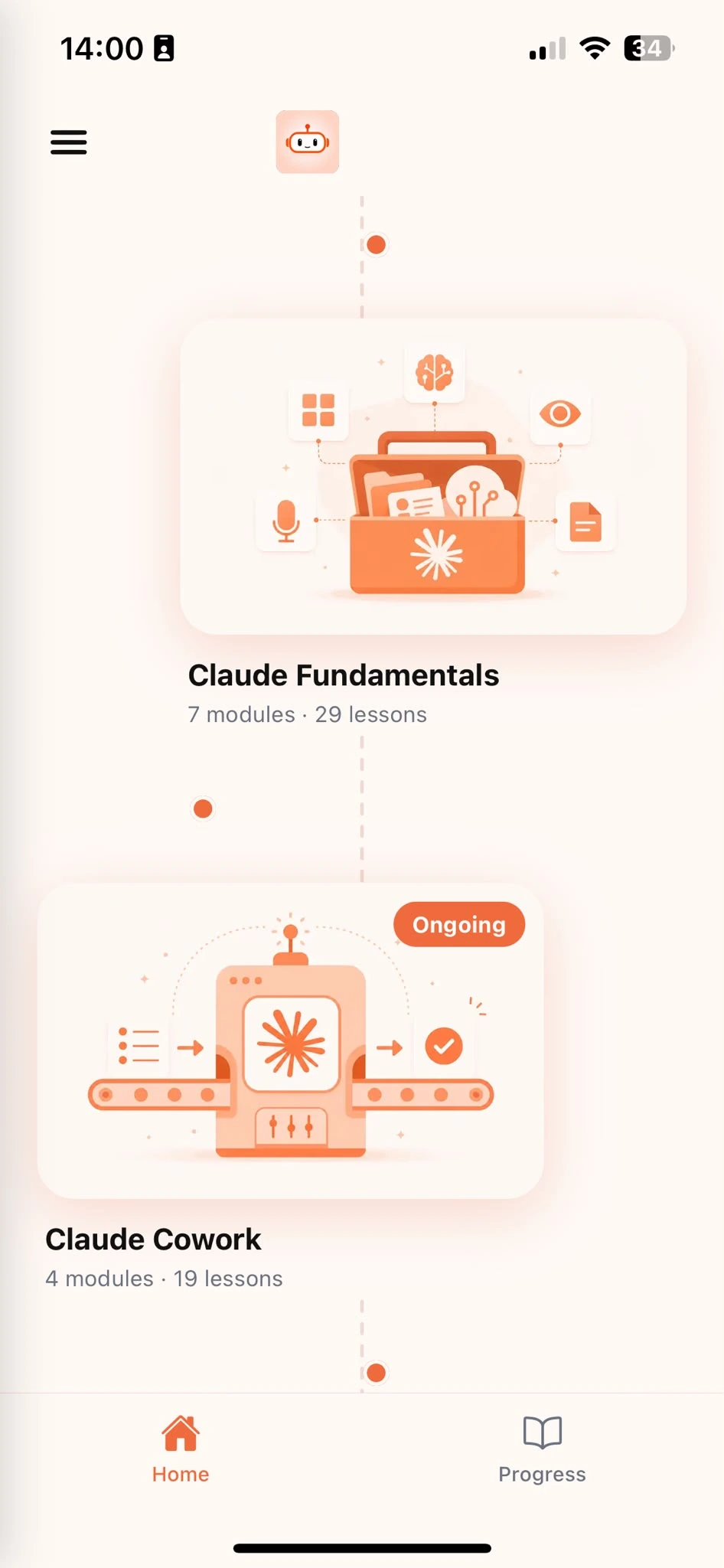
Browse Courses
Choose what to learn from a structured library of Claude lessons.
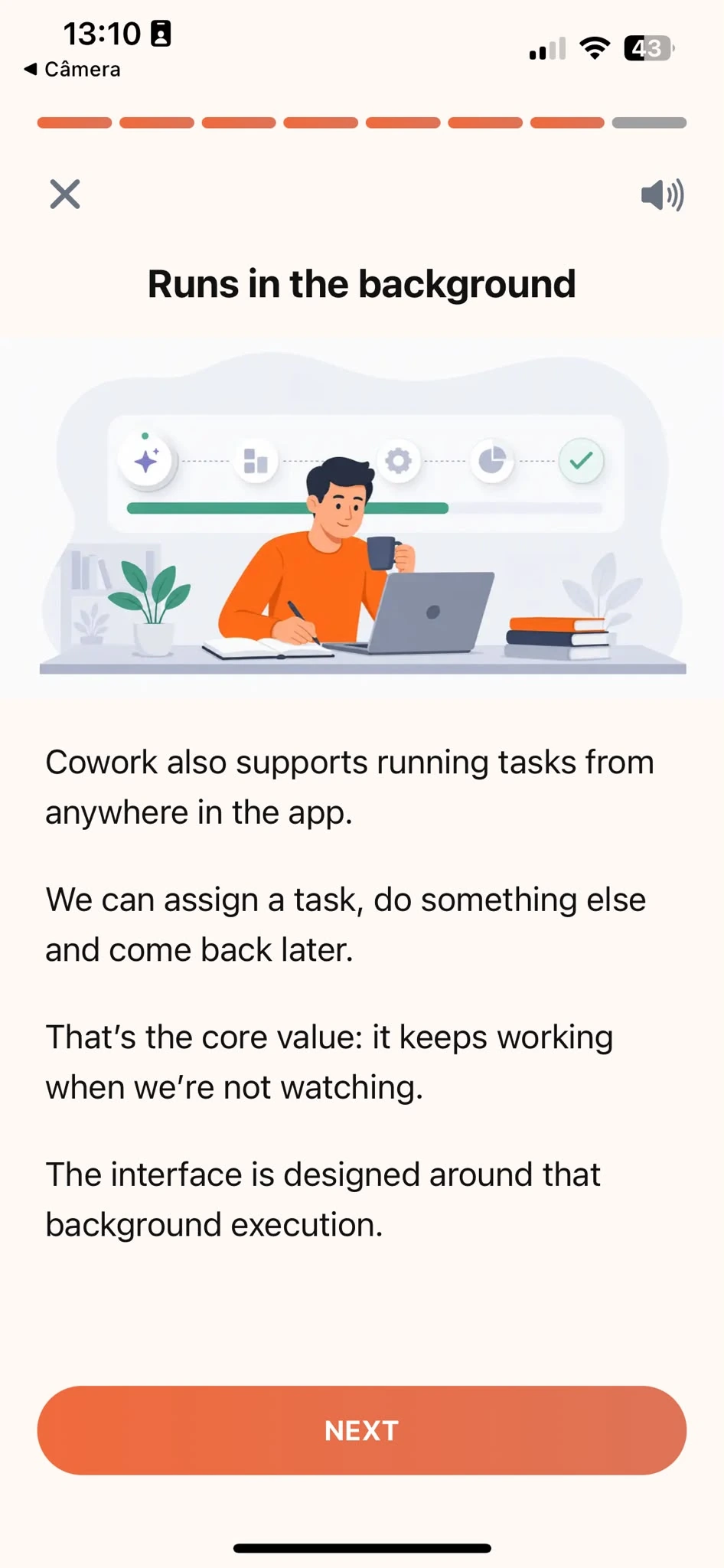
Learn
Short, focused lessons that build from fundamentals to real-world tasks.
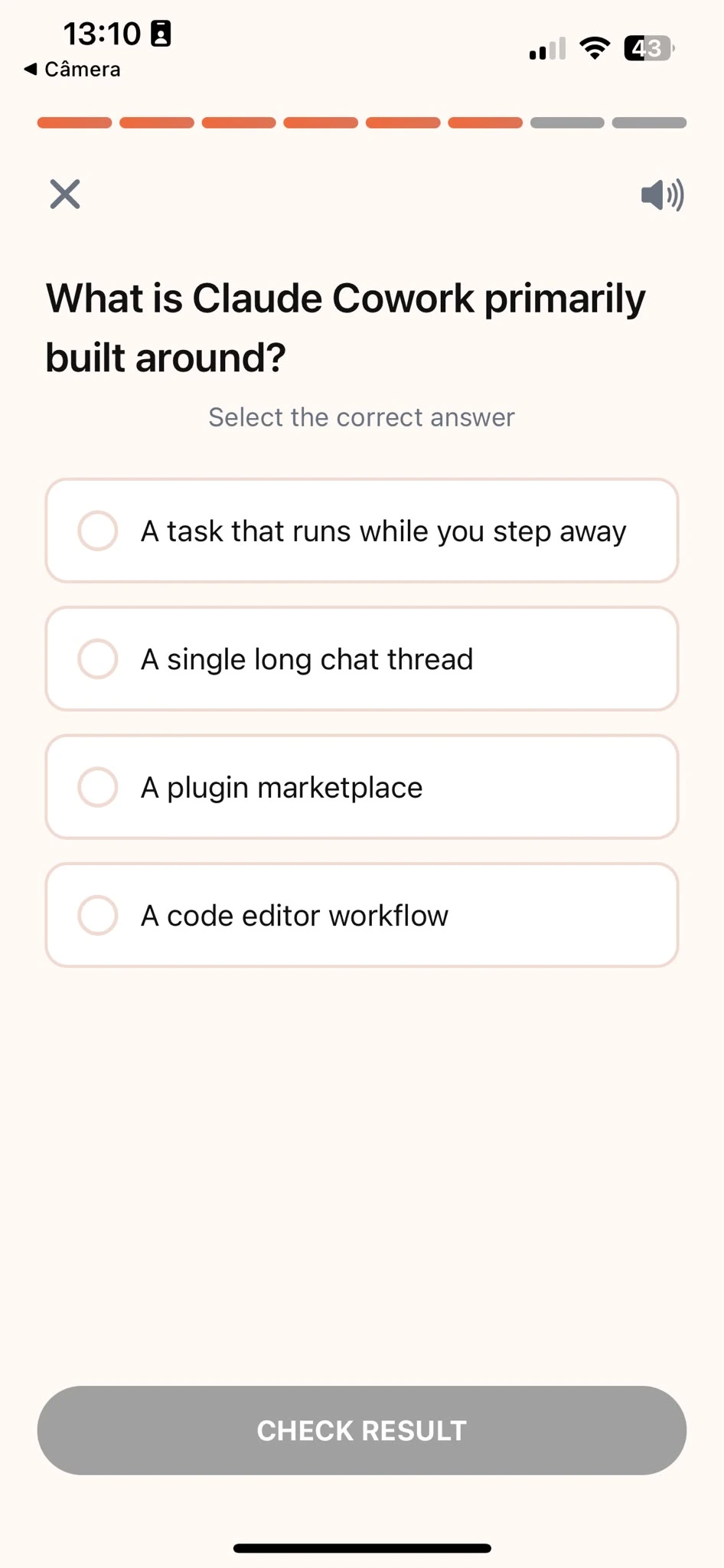
Quiz
Test your understanding right after each lesson, not at the end.
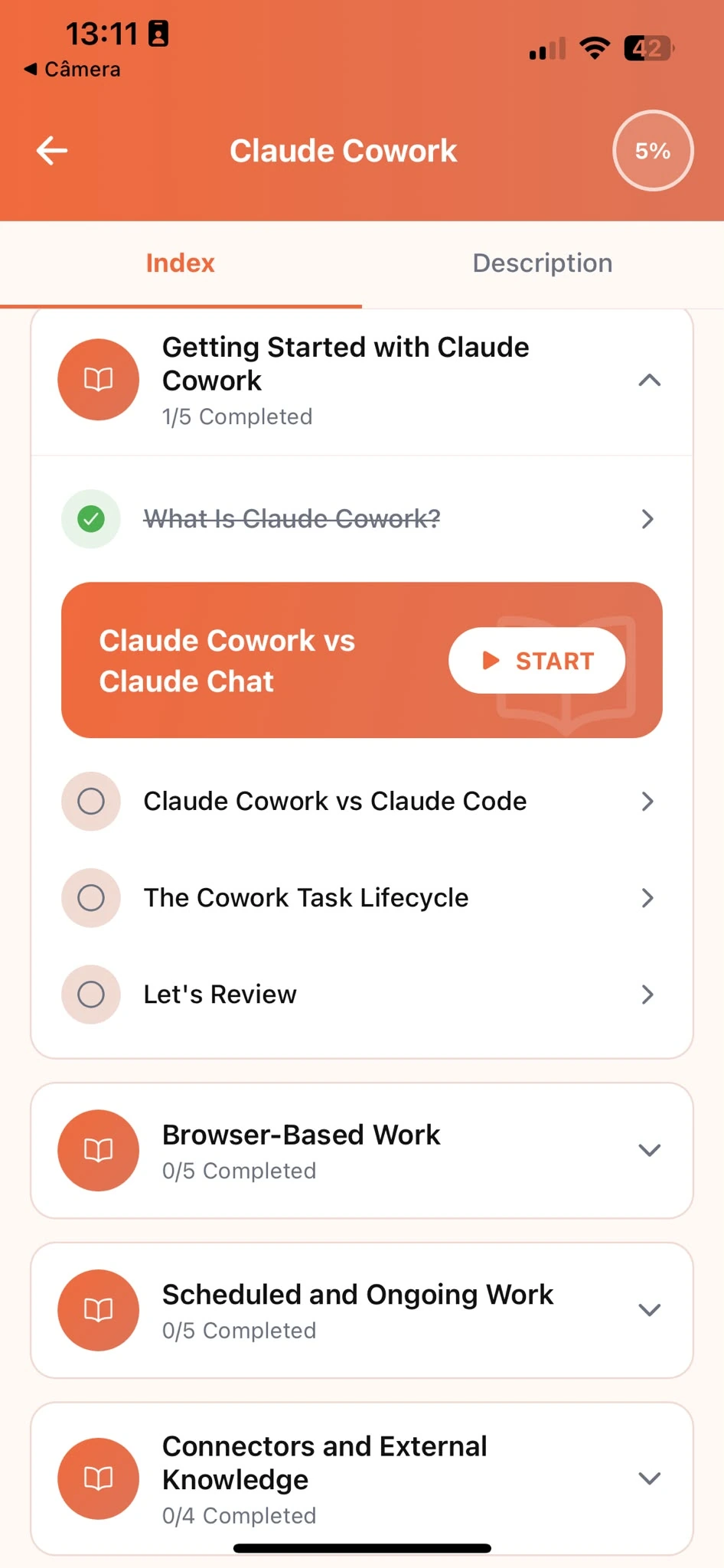
Track Progress
Pick up exactly where you left off, on any device, at any time.
Every guide in this path
- Marketing8 min read
Getting Started With Claude: The Core Habits
The habits that make Claude genuinely useful at work, whatever your job: giving context, setting constraints, and refining an answer instead of restarting.
Read article - Marketing12 min read
How to Write Better Marketing Copy With Claude
The brief-first workflow marketers use to get copy that sounds written for a real reader: prompt templates, a bad-to-excellent walkthrough, and mistakes to skip.
Read article - Marketing8 min read
How to Build a Brand Voice Claude Actually Follows
Build a brand voice profile Claude checks every draft against: real samples, do and don't rules, one anti-example, plus copy-paste prompts and a worked example.
Read article - Marketing4 min read
The Pain Points Hiding in Your Customer Interviews
Group raw customer interview notes with Claude into pain points backed by real quotes, not vague summaries too generic to write from.
Read article - Marketing3 min read
Turn Competitor Pages Into a Positioning Map
Turn a stack of competitor pages into a positioning map: see exactly what's already claimed and find the gap that makes your angle a discovery, not a guess.
Read article - Marketing7 min read
How to Write an SEO Content Brief With Claude
Turn a keyword into a content brief with a real angle: the keyword-to-outline pipeline, what Claude can and can't do for SEO, a worked example, and a template.
Read article - Marketing7 min read
How to Write a Campaign Brief With Claude (Template)
Turn a one-line campaign goal into a one-page brief with Claude: the five fields, a decisions-vs-inferences check, a worked example, and a copy-paste template.
Read article - Marketing4 min read
Write a Marketing Email That Feels One-to-One
Write a list email that reads like it's addressed to one person, not a polished announcement every reader can tell went out to the entire database.
Read article - Marketing3 min read
One Ad, a Week of Headlines Worth Testing
A process for generating genuinely different ad angles and matching CTAs with Claude, instead of shipping one headline with nothing to test it against.
Read article - Marketing4 min read
How to Repurpose One Blog Post for Every Channel
Turn one blog post into a LinkedIn update, an email teaser, and a caption that each read like they were written for that platform, not just trimmed.
Read article
Is this for you
Who this is for, and what you'll walk away with
This path is built for people doing real marketing work who want Claude to genuinely help, not just produce filler to edit.
Who this is for
Content and brand marketers who write and edit regularly and want the output to stop sounding generic
Performance and growth marketers who need real test variants and briefs quickly
Product marketers turning research and positioning into messaging
Founders and solo marketers doing all of the above with no team to hand off to
Anyone who has tried Claude for marketing, found the results flat, and wants to know what they were doing wrong
You do not need any AI experience. You do need real marketing work to practice on.
What you'll be able to do afterward
Write a brief Claude can produce usable copy from on the first try
Give feedback that improves the next draft instead of reshuffling the same words
Set up a brand voice reference once and reuse it across every writer and every prompt
Turn raw research into quote-backed pain points and a positioning angle
- Build ad tests where a flat result still tells you something
Repurpose one piece into channel-native versions in a single conversation
Skills you'll develop
- Briefing. Naming the audience, goal, constraint, and angle before you ask for anything.
- Precise feedback. Pointing at the exact line, then naming the problem and the direction.
- Synthesis. Turning a pile of notes or pages into a short list of named, sourced themes.
- Knowing when to restart. Telling a wording problem apart from a wrong angle.
Where to go after Marketing
| Next path | Why it follows |
|---|---|
| Content Creators | Scripts, hooks, and turning one idea into a week of content, if you also make video or run a newsletter |
| Sales | The same brief-and-feedback loop applied to outreach, follow-ups, and proposals |
| Entrepreneurs | Pitches, investor updates, and turning customer conversations into what to build |
| Productivity | The reusable-workflow habits that make all of the above faster |
Frequently Asked Questions
Can Claude be used for marketing?
Yes. Marketers use it for copywriting, audience and competitor research, campaign and content briefs, and repurposing content across channels. It works best as a drafting-and-feedback partner: you bring the brief and the judgment, Claude brings speed and options to compare.
Is there a Claude marketing course?
This is one. It is free, self-paced, and built around real marketing tasks rather than generic AI theory. The Claude Tutorial app adds guided lessons, quizzes, and progress tracking on top of the same material.
How should I start learning Claude for marketing?
Begin with Getting Started with Claude for the core habit, then Writing Better Marketing Copy for the drafting loop, then set up a brand voice reference. The learning-path section above lays out the full beginner-to-advanced order.
What is the best AI for marketing?
The one you can brief well and steer. Marketers choose Claude for copy because its default voice needs less rewriting and it holds a long editing conversation without drifting. The bigger lever is the quality of your brief, not the model.
How do marketers actually use Claude day to day?
Not as a one-shot generator. The pattern is: write a specific brief, get a first draft, give direct feedback the way you would to a person, ask for genuinely different angles to compare, and stop when the copy is something you would ship.
Is Claude better than ChatGPT for marketing?
Writers often find Claude's default voice less obviously AI-written and easier to steer across a long editing conversation, which matters for copy. For most marketing work the bigger variable is the quality of your brief, not the model you pick.
Can Claude replace a copywriter?
No. It removes the blank page and the first few drafts, and it is a fast second opinion. Deciding the angle, knowing the audience, and judging what ships stay human.
Can Claude do SEO or keyword research?
It can turn a keyword into a structured content brief with a real angle and outline, and it can draft metadata. It cannot see live search results or give you accurate search volume, so pair it with your own keyword tool and paste in what is currently ranking.
Will Claude's copy sound generic or obviously AI-written?
It does when the prompt names a product and a format but no reader, no goal, and no constraint. Give it a specific audience, one core message, and a brand voice reference, and the output sharpens immediately. The course covers exactly how.
Do I need AI experience to start?
No. The course starts from the fundamentals and assumes you have never used Claude. If you already use it occasionally, the structured approach fills gaps and builds more reliable habits.
How long does the course take to complete?
Most learners finish the core curriculum in two to four hours, in short sessions. A single lesson runs about ten minutes, so it fits inside a working day without blocking off a half-day.
Can I use Claude's free plan while taking the course?
Yes. Everything taught here works on Claude's free plan. A paid plan gives you more usage, but it is not required to complete the lessons or apply what you learn.
Start learning Claude
Download Claude Tutorial and practice these workflows on your own campaigns, one ten-minute lesson at a time.